Most bathroom renovation projects don’t go wrong during construction. They go wrong before it starts, when homeowners choose a contractor without fully understanding what they’re hiring for. Knowing how to choose a bathroom renovation contractor is less about finding the lowest bid and more about finding the right match for your specific scope, timeline, and expectations. At Orren Pickell Building Group, where our bathroom remodeling team has worked with North Shore families for nearly 50 years, that pattern holds remarkably consistently.
Start With Your Own Needs Before You Contact Anyone

Selecting a bathroom renovation contractor starts with clarity about your own project. Before making a single call, identify which type of renovation you actually need. A fixture-only update, a cosmetic refresh, and a full gut renovation each require a different type of contractor and skill set.
Budget awareness matters equally. As a general benchmark, basic refreshes broadly fall below $75,000, while high-end renovations can reach $125,000 or more. Active construction on a full remodel typically runs six to twelve weeks, but permitting and planning can add several more.
Before reaching out to anyone, consider the following:
- Do you need structural changes?
- Is plumbing or electrical being relocated?
- Do you want design guidance or just execution?
Answering these questions first is the foundation of how to choose the right contractor for your bathroom remodel. If you are planning a primary bath overhaul, our master bathroom renovation process walks through the decisions unique to that space.
How to Find Potential Contractors for Bathroom Remodeling
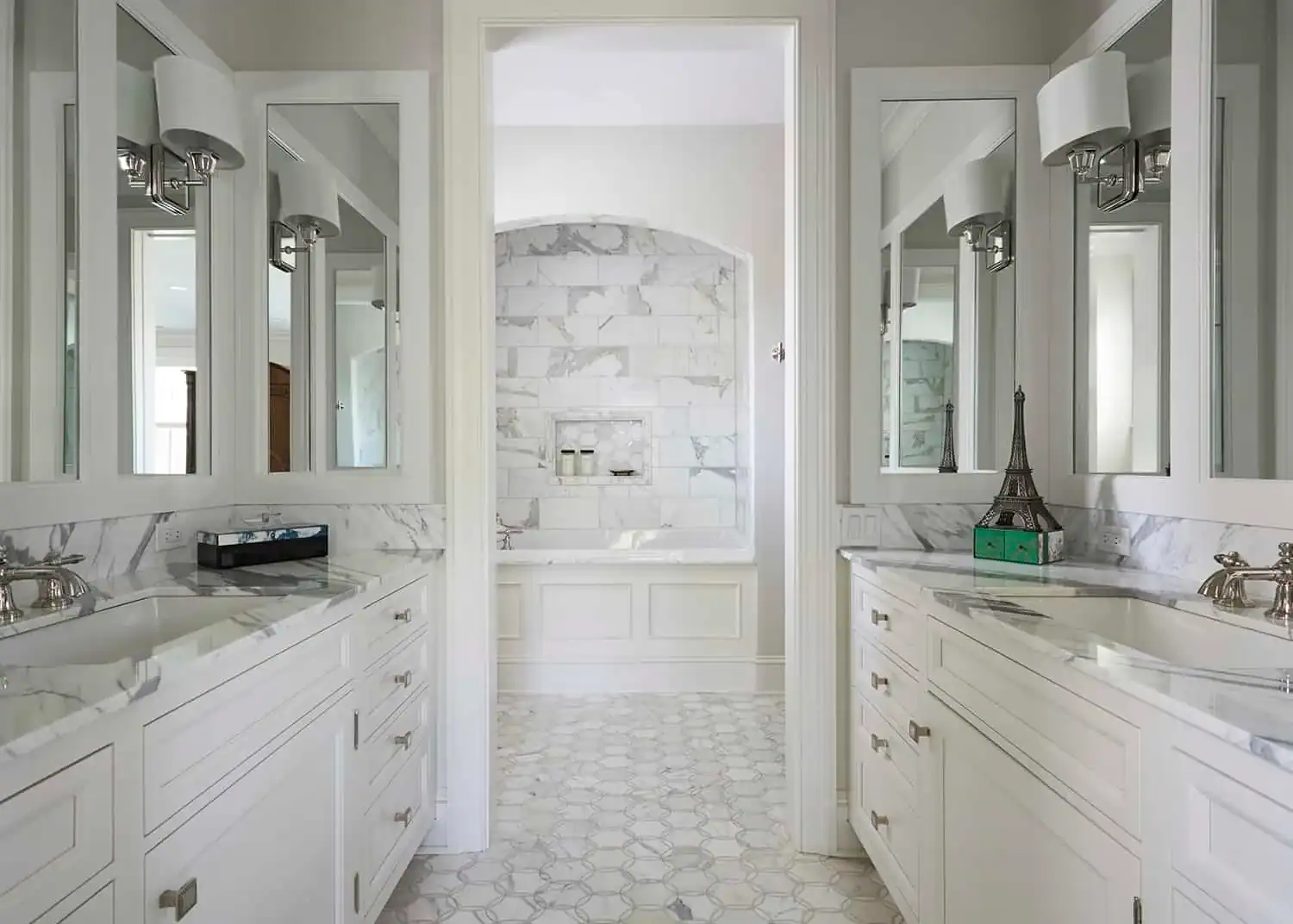
Contractor and television host Mike Holmes has long emphasized that bathroom renovations done incorrectly the first time cost significantly more to fix than to do right. That principle starts with finding the right candidates.
Word-of-mouth referrals from neighbors, friends, or family remain the most reliable signal of real-world performance. Online platforms like Google Maps reviews for Orren Pickell Building Group and the Better Business Bureau are useful supplements. Pay attention to review volume, recency, and how contractors respond to negative feedback. A professional response to a complaint reveals more than a perfect rating.
Local home builders’ associations and trade directories are another credible sourcing channel. Understanding contractor types also matters:
| Contractor Type | What They Do | Best For |
| Design-Build Firm | Handles planning and execution under one roof | Full renovations where design and cost need to stay aligned |
| General Contractor | Manages subcontractors across trades | Projects with a clear design already in place |
| Specialty Remodeler | Focuses on specific scopes of work | Smaller or targeted updates |
Design-build firms often reduce miscommunication and cost overruns because design and construction teams share accountability for the same estimate from day one. For anyone considering a larger scope, our architectural design services cover how we approach full-service projects at that scale.
How to Narrow Down Your List of Potential Contractors
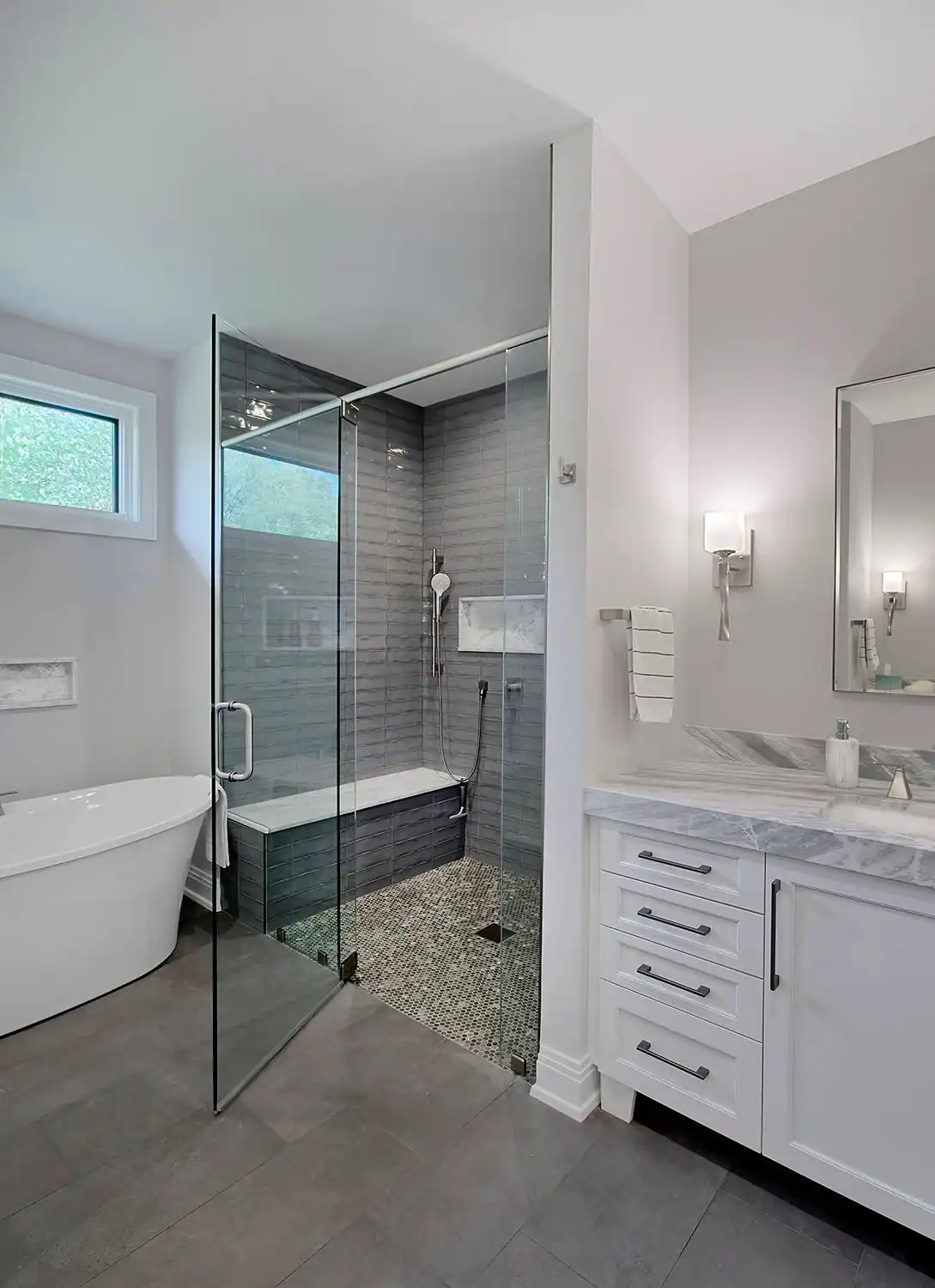
Legitimate contractor credibility looks like a verifiable track record built over time. Look for firms where a named principal or project director has a documented, verifiable history with the company, not just a title on a website.
Criteria to Filter Candidates
Use these criteria to narrow your list:
- Licensing and insurance: Verify state contractor licensing, general liability insurance, and workers’ compensation coverage. State licensing boards let you check complaint histories directly.
- Portfolio specificity: Review portfolios featuring bathroom-specific projects, not just general remodeling volume.
- Trade structure: Ask whether the contractor uses in-house trades or subcontracts plumbing, electrical, and tile, and whether those subcontractors carry their own licenses.
Red Flags to Watch For
Eliminate candidates immediately if you see any of these:
- No written contract offered
- Upfront payment requests exceeding 30 percent
- Vague answers about permits
- Inability to produce insurance certificates
- Communication limited to text with no written documentation
Questions to Ask Before You Sign Anything

At the consultation stage, the right questions expose problems before work begins. Plan to gather a minimum of three bids before asking these.
Project management: Who is my day-to-day contact? Will you be on-site or managing remotely?
Permits: Who pulls them, and are fees included in the estimate? Contractors should always manage permit acquisition. If they ask you to pull permits yourself, treat that as a warning sign.
Communication: How do you keep clients updated? Do you use a client portal, project management software, or scheduled check-ins? At Orren Pickell, clients get 24/7 access to drawings, photos, and schedules through our contact form.
Surprises: How are unexpected conditions documented? How are change orders approved before work proceeds?
Payment: Request a milestone-based schedule. A sound structure includes 10 to 30 percent at signing and progress payments tied to completed phases..
References: Did the project finish on time and within budget? How did they handle unexpected problems? Would you hire them again?
How to Finalize Your Decision and Protect Your Investment

Selecting a bathroom renovation contractor ultimately combines objective criteria with a working relationship. You will share your home with this team for four to eight weeks. A contractor who listens more than they pitch and responds promptly during the sales phase will behave the same mid-project.
Confirm that the contract specifies the scope of work in writing, with materials identified by name. Start and completion dates, the payment schedule, the change order process, and warranty terms for labor and materials should all be documented.
Build a 15 to 20 percent contingency reserve into your financial plan before signing, separate from the contractor’s estimate. This covers legitimate surprises, not scope creep. Scope creep is avoidable with a tight contract. True change orders, like discovering outdated plumbing once walls open, are not.
According to the NKBA Kitchen and Bath Planning Guidelines, one of the most common reasons bathroom renovation projects go over budget is insufficient planning before construction begins, particularly around hidden conditions and material lead times. Getting ahead of those variables during the selection process is one of the highest-value things you can do.
Ready to start your bathroom renovation with a team that brings nearly 50 years of award-winning remodeling experience to every project? Our custom home renovation and new build work highlight our expertise. Our custom home builder office is located at 444 Skokie Blvd, Wilmette, IL 60091, United States, conveniently situated to serve homeowners throughout Chicagoland and the North Shore.
FAQs About Orren Pickell Building Group

How long has Orren Pickell been in business?
The firm was founded around 1976, giving it nearly 50 years of experience as a family-owned design/build firm.
What makes Orren Pickell different from other remodeling contractors?
Orren Pickell handles design, construction, custom carpentry, punch list, and ongoing home maintenance entirely in-house. Most competitors handle only one or two of these phases. The firm also uses Open Book Pricing, giving clients full visibility into every line item.
How do I get started with Orren Pickell Building Group?
Call 847-572-5200 or fill out the contact form at pickellbuilders.com/contact-us/. The sales team will qualify your project and walk you through the next steps.