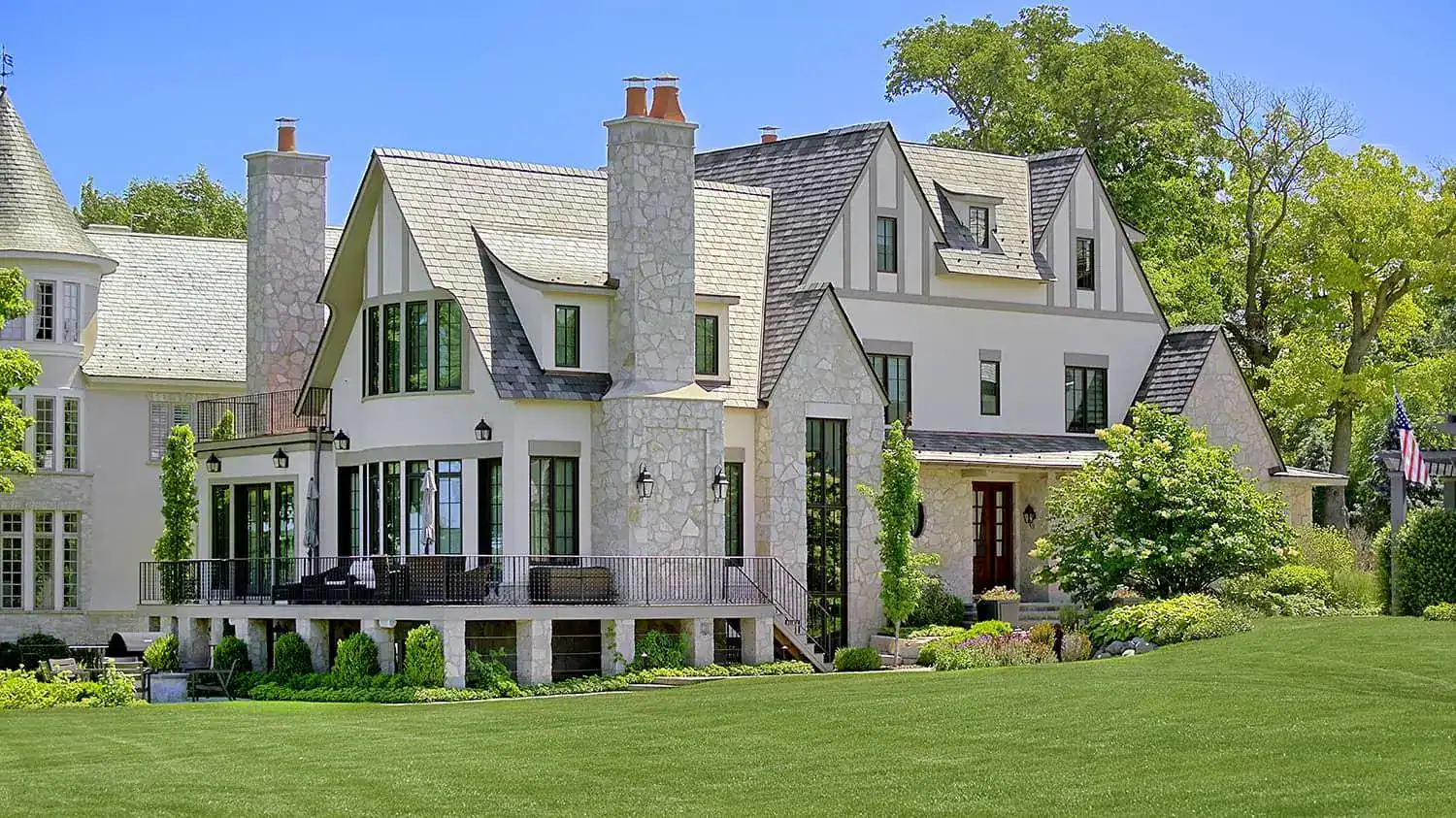
A luxury home is generally one priced in the top ten percent of homes for its local market, though the number on the listing only tells part of the story. Location, materials, craftsmanship, and the thinking behind every design choice carry just as much weight. If you’re asking what is considered a luxury home before you start your own project, here’s the honest answer: it depends on where you’re building, but the pattern holds everywhere. At Orren Pickell Building Group, we’ve spent decades designing and building custom homes across Chicago’s North Shore, Southern Wisconsin, and Harbor Country, Michigan, and we see the same gap again and again between what people expect from a luxury home and what actually earns the label.
What Is Considered a Luxury Home in Today’s Market

Most real estate data defines luxury the same way class rank works in school: it’s relative, not fixed. A home sits in the luxury tier when it lands in the top slice of prices for wherever it’s located, not because it clears some nationwide number. Recent tracking from the Institute for Luxury Home Marketing puts the national median luxury threshold at roughly $900,000, though that number means almost nothing on its own: a $900,000 home in rural Wisconsin and a $900,000 home three blocks from Lake Michigan are not playing in the same league.
Within that top tier, the market generally breaks into three rough bands:
| Tier | Where It Sits | What Changes |
|---|---|---|
| Entry-Level Luxury | Roughly the top 10% locally | Enters the luxury conversation, but finishes and lot size vary widely |
| High-End Luxury | Roughly the top 5% locally | Larger lots, more architectural customization, fewer production-style compromises |
| Ultra-Luxury | Roughly the top 1% locally | Estate-scale properties, extensive site work, amenities built around a specific lifestyle |
How the North Shore Changes the Math

On Chicago’s North Shore, that whole scale shifts upward, for a few specific reasons:
- A home can move between tiers without changing at all. When the surrounding market shifts, a family relocating from a smaller market is often surprised at what it actually takes to land in the top tier here. A home that was the nicest one on the block back home might be a solid, ordinary entry on the North Shore, simply because the comparison set changed.
- Lot scarcity and lakefront access push the baseline higher. A home in Lake Forest, Winnetka, or Kenilworth that would be unmistakably high-end almost anywhere else in the Midwest might sit closer to the middle of the pack once you’re inside those village limits, because decades of estate-grade construction history already set the bar there.
- Land alone can price a project into the luxury tier. We see this constantly in teardown-and-rebuild projects: a family buys a modest older home on a quarter-acre near the lake, and the land alone prices the project into the luxury tier before a single wall goes up.
- Location decides the tier as much as the build does. The same house, built on a similar lot an hour further from the lake, would land in an entirely different tier. Evaluate your project against the local market you’re actually building in, not a national average you read online.
- The comparison set is what matters, not a fixed dollar figure. Two families can spend the same amount on two different North Shore lots and land in two different tiers, because one neighborhood’s top ten percent sits well above another’s. That’s the main reason national headlines about luxury thresholds rarely match what local buyers and builders actually see on the ground.
Beyond the Price Tag: What Luxury Homes Actually Deliver

Price gets a home into the conversation. Four things decide whether it holds up once you’re standing inside it.
Location and Site
A luxury home takes advantage of where it sits: privacy from neighbors, proximity to water or open space, and a layout that works with the lot’s natural grade instead of fighting it. That’s a job for the architecture itself. A site-driven architectural design process reads a lot’s grade, sightlines, and orientation before anyone draws a single wall, which is why two homes with identical floor plans can feel completely different depending on how they’re placed on their lots.
Materials and Craftsmanship
This is where the gap between “expensive” and “luxury” shows up fastest. Stone, hardwood, and custom millwork chosen for one specific room, rather than ordered from a single catalog for the whole house, is what separates a genuinely luxury interior from one that just cost a lot. A kitchen built around how one family actually cooks reads differently than a kitchen built to match a builder’s standard package, even when the materials on the spec sheet look similar on paper.
Smart Home Technology
Integrated climate control, lighting, and security systems have moved from novelty to expectation. The difference in a well-built luxury home is that the technology gets planned into the walls during design, not bolted on afterward. Wiring, panel placement, and network infrastructure are far easier to plan before drywall goes up than to retrofit later, and a home built this way ages much better as the technology itself gets upgraded over the years.
Outdoor Living
Pools, outdoor kitchens, and covered terraces extend the home’s livable square footage outward. On the North Shore, that often means designing around a short outdoor season: covered spaces, radiant heat, and durable materials that hold up through a Chicago winter matter more here than they do in a warmer climate. A patio that only works for four months a year is a missed opportunity at this level, which is why the better North Shore projects treat three-season rooms and outdoor fireplaces as part of the core design rather than an afterthought.
Here’s what we tell every client who asks us this question before they’ve broken ground: the finishes photograph well, but the site work, the structural decisions, and the mechanical planning are what actually determine whether a home performs like a luxury property for the next thirty years. If you want to see what that looks like from first sketch to final walkthrough, our guide to building a luxury home walks through the whole process, phase by phase.
How Luxury Home Building Is Changing

Two things are reshaping what luxury means right now: the price of entry keeps climbing, and buyers want something different once they’re inside.
The Price of Entry Keeps Climbing
A decade ago, a million-dollar home solidly cleared the luxury bar in most of the country. Today, that same number barely cracks the top tier nationally, pushed up by limited inventory and years of steady demand. The entry point keeps rising, which means features that used to define luxury, like stone countertops, a soaking tub, or a finished lower level, are now closer to standard expectations on a serious custom build rather than the differentiators they once were.
Buyers Want Substance, Not Just Show
Buyer preferences have shifted toward restraint. Clients increasingly want homes that feel considered rather than showy: energy-efficient systems, materials that age well, and design choices that reflect their actual life instead of a showroom. Fewer clients ask for a single dramatic statement room, and more ask how every room will hold up over the next twenty years of actual daily use. We hear this most clearly from younger buyers who grew up watching older relatives manage homes that looked impressive but were expensive and difficult to maintain. They want the substance without the upkeep headaches, and they ask harder questions about mechanical systems and long-term maintenance than clients typically did a decade ago.
What That Looks Like in Practice
That shift toward substance is part of why we built Open Book Pricing into how we work: clients see every line item as the design develops, instead of discovering surprises partway through construction. Two examples from our own client list show what that looks like in practice:
- Rob and Joanne have said everything was discussed and made clear up front, and that the whole design and build process ended up being enjoyable instead of stressful, which is not the reputation custom home building usually has.
- Kristin Reyes told us her finished home’s quality was unmatched compared to anything else she had seen, and that kind of feedback is exactly what we build our process around rather than treating it as a nice compliment after the fact.
How to Define a Regular Home vs. a Luxury Home
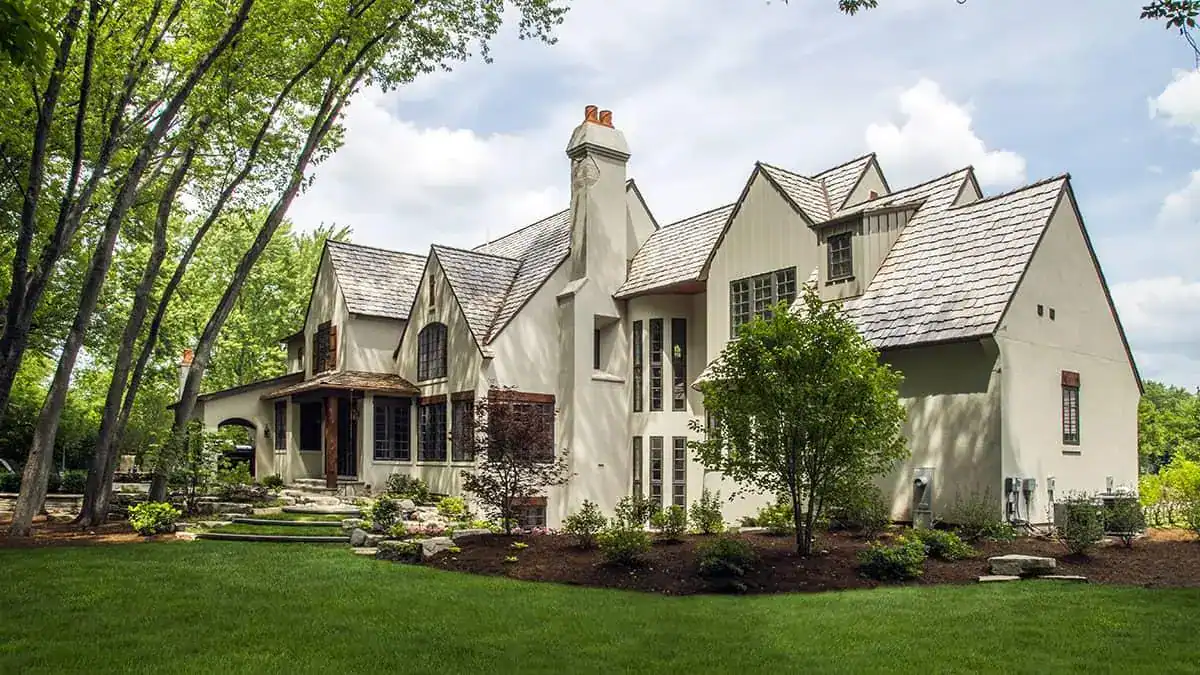
This question comes up constantly, and homeowners usually assume the answer is about finishes. In our experience actually building both kinds of homes, the real differences show up earlier, in decisions most buyers never see:
| What Changes | Production or Regular Build | Custom Luxury Build |
|---|---|---|
| Design Process | Works from a plan book or a limited set of pre-engineered options, chosen to keep every home in a subdivision close to the same cost to build | Starts from a blank sheet, built around one specific family and one specific lot |
| Path to Construction | Goes from plan to permit in a matter of weeks | Often goes through several rounds of design revisions before anyone pours a foundation |
| Structural Engineering | Standard framing package | Custom solutions for open floor plans, oversized windows, and dramatic ceiling heights |
| Trade Coordination | Standard trade sequence | Specialty trades, including custom millwork, stone fabrication, and integrated technology, sequenced carefully so no one’s work damages someone else’s |
| Site Work | Minimal, built for a standard subdivision lot | Engineered grading, drainage, and foundation design for site-specific conditions like lakefront or wooded lots |
| Finish Selection | Chosen from a standard builder catalog, the same options offered to every buyer in the subdivision | Selected room by room around how one family actually lives, with no obligation to match a neighbor’s choices |
None of that shows up in a listing photo, which is exactly why luxury gets reduced to square footage and countertop material in casual conversation. If you’re trying to tell whether a home, or a renovation, actually qualifies, ask about the process behind it, not just the finish schedule. Bringing an older home up to luxury grade is entirely possible through a thoughtful remodeling project, but only if the structural and mechanical work underneath gets the same attention as the visible finishes.
Decades of awards history, including more than a dozen Crystal Key honors, the Home Builders Association of Greater Chicago’s top distinction, back that standard up for us. That’s a distinction judged by peers on process and craftsmanship over many years, not on how a single room photographs for one listing.
Building Toward Your Own Definition of Luxury

The definition of a luxury home will keep shifting as prices and buyer expectations change, but the underlying test doesn’t: does the home hold up to the standard you set for it, in the location you chose, for as long as you plan to live there? That’s the question we help clients answer on every project, whether it’s a new custom home or a whole-house remodel, and it’s a very different question from whether a home simply looks impressive in photos the day it’s finished.
Orren Pickell Building Group has been designing, building, and maintaining homes across Chicago’s North Shore since the 1970s, with architecture, construction, and maintenance handled by one team instead of being handed off between separate companies at every stage. That single-team structure is also why we can stand behind a home years after the final walkthrough instead of disappearing once the invoice is paid. If you want to talk through what luxury means for your specific lot and your specific family, stop by our Wilmette custom home builder office or call 847-572-5200 to start the conversation.